The fastest machine isn’t always the best
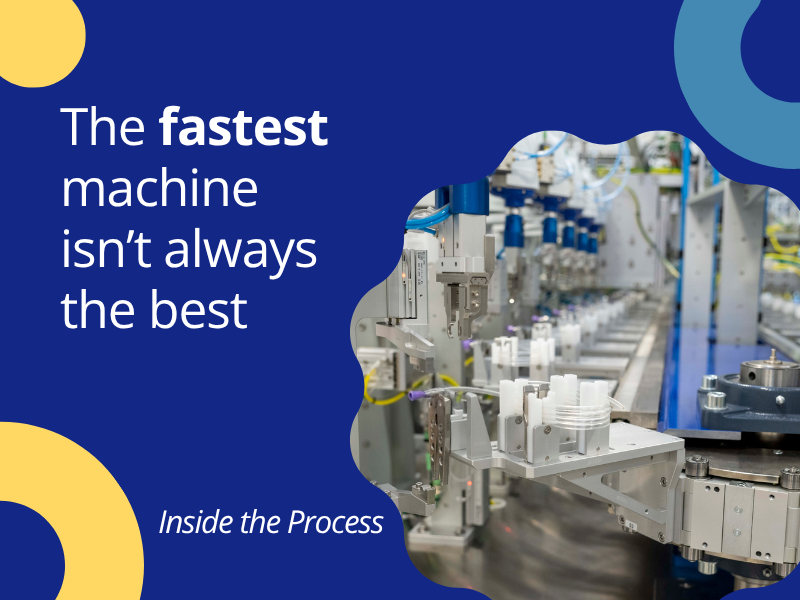
When designing production systems, speed is often the most visible metric. It’s also the easiest to compare, but it’s rarely the most important.
A fast machine doesn’t automatically guarantee higher productivity. If the process isn’t balanced, if there are bottlenecks upstream or downstream, or if quality isn’t consistent, speed becomes a secondary factor. In fact, in some cases, it can amplify existing inefficiencies.
True productivity is the result of a balance between several elements:
- cycle times,
- reliability,
- product quality,
- operational continuity.
Optimizing just one of these aspects while ignoring the others often leads to results that fall short of expectations.
For this reason, when designing a production system, it is essential to adopt a comprehensive approach.
It is not a matter of building the fastest machine possible, but the one best suited to the production context in which it will be used.
In other words, the best machine is not the one that does the most, but the one that makes the entire process work best.